Agent Orchestration Patterns
Architecture notes on multi-agent orchestration patterns — supervisor, hierarchy, and pipeline approaches for complex AI workflows.
Notes
These are my working notes on different approaches to orchestrating multiple AI agents in a system. Each pattern has trade-offs in terms of complexity, latency, and reliability.
Supervisor Pattern
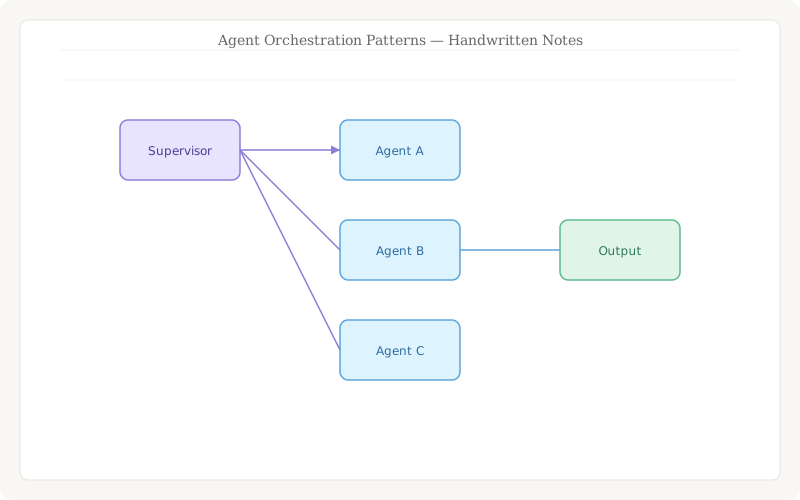
A central supervisor agent coordinates specialist agents. The supervisor decides which agent to invoke based on the current task state.
Pros: Clear control flow, easy to debug
Cons: Single point of failure, supervisor becomes bottleneck
Hierarchical Pattern
Agents are organized in a tree structure where parent agents can delegate to child agents. Each level handles increasing specificity.
Pros: Scalable, modular
Cons: Complex routing logic, potential for deep call stacks
Pipeline Pattern
Agents are arranged in a sequential pipeline where each agent transforms the output for the next stage.
Pros: Simple, predictable flow
Cons: Rigid, no conditional branching
Key Insight
In practice, I've found that a hybrid approach works best — use a supervisor for high-level routing and pipelines for well-defined sub-workflows. This balances flexibility with predictability.